


What is Glaucoma?
Glaucoma is a condition that damages the optic nerve and is often linked to abnormally high pressure in your eye. Without swift and effective treatment, glaucoma can actually lead to permanent vision loss. Alarmingly, nearly half of those with glaucoma are not even aware they have the condition until a large portion of their vision is lost.
State of the Art Treatment Options
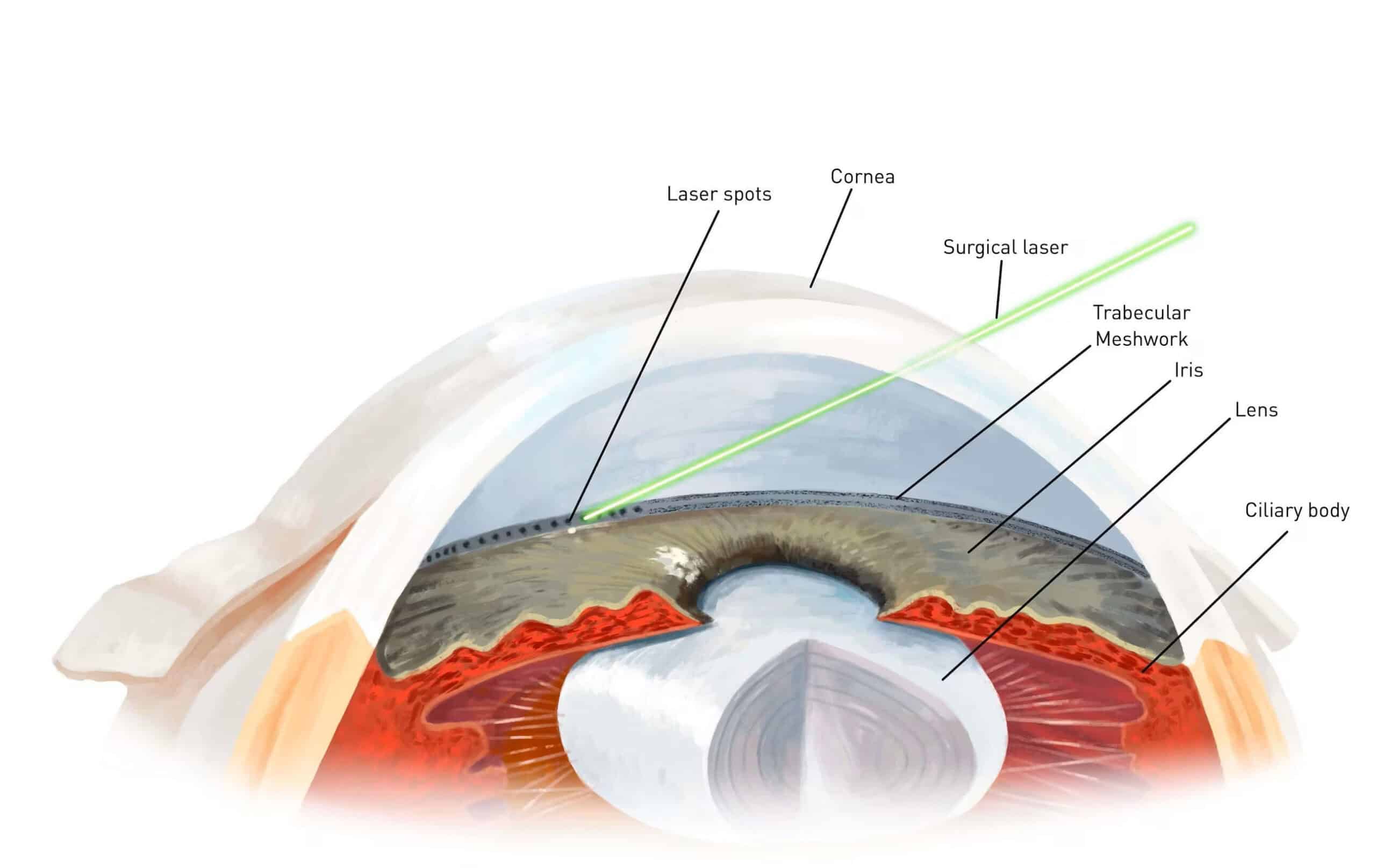
Selective Laser Trabeculectomy (SLT)
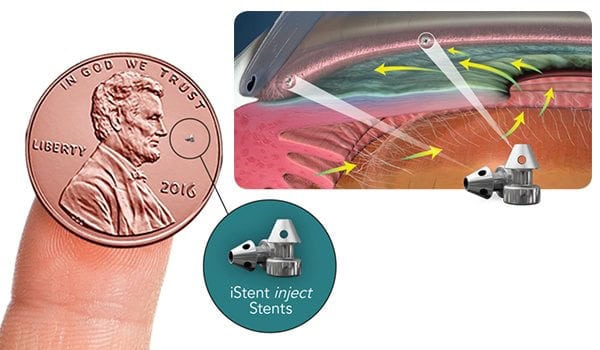
iStent Trabecular Micro-Bypass Stent
iStent Inject consists of two preloaded heparin-coated titanium stents, which are smaller and designed for easier implantation. Each stent allows for multidirectional flow through Schlemm's canal, enhancing the outflow of aqueous humor. Primarily used in conjunction with cataract surgery for patients with mild to moderate open-angle. It is effective in lowering intraocular pressure (IOP) by creating a bypass through the trabecular meshwork.
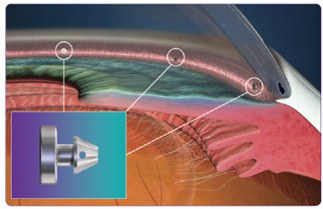
iStent Infinite features three stents preloaded into an injector system, allowing for more extensive distribution. This design aims to improve aqueous outflow even in patients who have previously undergone other surgical treatments for glaucoma. It is approved for use as a standalone procedure or in conjunction with cataract surgery.
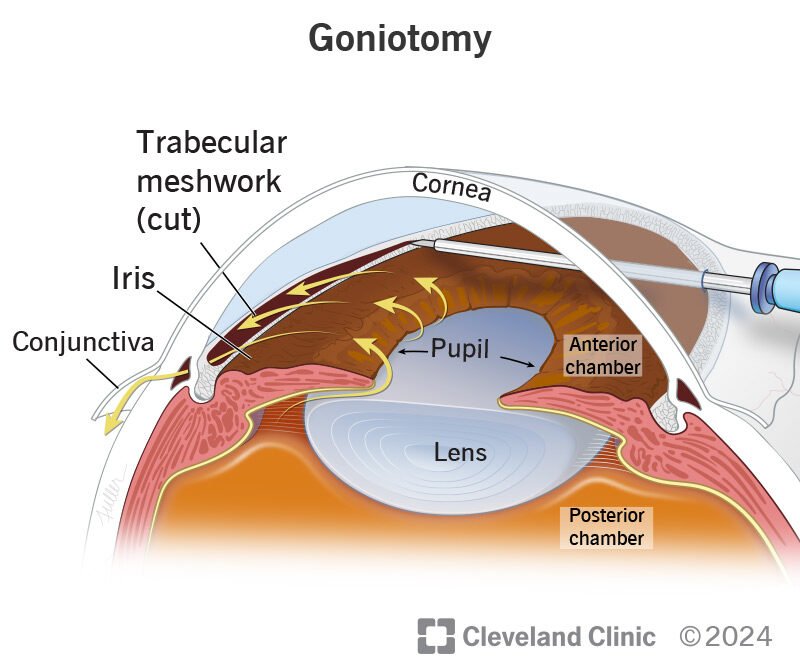
Goniotomy
Goniotomy is a type of microinvasive glaucoma surgery (MIGS) that improves aqueos humor fluid drainage out of the anterior chamber by making small cuts in the trabecular meshwork for fluid to exit through. It is approved for use as a standalone procedure or in conjunction with cataract surgery.
Early Detection Through Regular Eye Exams
Regular eye examinations are essential when it comes to detecting glaucoma early on—the time when it’s most treatable. Our glaucoma doctors at St. Cloud Eye Clinic recommend annual eye exams as your first line of defense against the effects of glaucoma. Through these exams, we can detect signs of nerve damage and other factors associated with glaucoma before you even notice a change in your vision.
Treatment Options You Can Trust
Our clinic is at the forefront of glaucoma treatment, offering the latest advancements in medical therapies to manage this condition the right way. Each treatment approach is chosen to best address each patient’s needs, whether that be prescription eye drops to reduce eye pressure or a laser procedure for glaucoma.
For more information about glaucoma treatment, read our frequently asked questions. Here, we offer in-depth answers to some commonly asked questions.
Advanced Glaucoma Treatment Options, Tailored to You
Our surgeons are among a select group trained to offer many options to treat your glaucoma. Each are designed to either improve your eye’s natural fluid outflow or reduce fluid production to safely lower eye pressure—a primary risk factor for optic nerve damage in glaucoma.
Treatments include but are not limited to: Eye drop, Laser procedures including SLT, YAG Peripheral Iridotomy and Micropulse, Goniotomy, Canaloplasty, and iStent or iStent inject.
Care Designed With You in Mind
Here, we believe in empowering our patients with knowledge about their health. We are happy to offer resources that will help you better understand glaucoma and how to manage your condition effectively. If you have any questions or concerns at any time, one of our experts will be ready and willing to help.

Frequently Asked Questions
Do Not Delete
What is Glaucoma?
Glaucoma is a disease that damages the optic nerve and causes vision loss. Like a cable wire, the optic nerve is responsible for carrying the images we see to the brain. Damage to the optic nerve can occur when pressure within the eye increases, usually due to a build-up of aqueous fluid inside the eye. This leads to the development of blind spots in our field of vision. However, damage may occur without elevation of the intraocular pressure. It is important to understand that these blind spots in the field of vision usually go undetected by the individual until the optic nerve is significantly damaged and a great loss of peripheral or central vision has occurred. Damage is typically related to elevated pressure in the eye, however, damage may occur without elevation of the intraocular pressure. Conversely, the pressure may at times be elevated without damaging the optic nerve. This is a condition known as ocular hypertension.
What are the different types of Glaucoma?
Not every type of glaucoma is the same, nor will it have the same impact on your life. If you have been diagnosed with glaucoma, please make sure to familiarize yourself with the different types of glaucoma listed below. If you have more questions about glaucoma, our team will be happy to provide additional information regarding your specific type of glaucoma and what this will mean for your life.
Primary Open-Angle Glaucoma
This is the most common type of glaucoma. The drainage angle, where the fluids in the eye drain, is open, but is not working efficiently. This inability to drain causes pressure within the eye to rise, which results in a gradual loss of peripheral vision.
Acute Angle Closure Glaucoma
This type of glaucoma occurs when the drainage angle is completely blocked. This prevents any fluid from draining from the eye and causes the pressure within the eye to suddenly rise. This extreme rise in pressure causes issues such as blurred vision, headaches, severe eye pain, and the appearance of halos around lights.
Chronic Angle-Closure Glaucoma
This describes a more gradual closing of the drainage angle, which occurs most frequently in people of Asian descent.
Secondary Glaucoma
This type of glaucoma progresses very much like chronic open-angle glaucoma. It occurs as a result of some other eye issue (such as an eye injury) and occurs when scar tissue blocks the drainage angle. The first symptom is loss of peripheral vision.
Congenital Glaucoma
This is a birth defect which affects the drainage angle. To prevent blindness, this condition must be treated shortly after birth. Symptoms include enlarged eyes, a cloudy cornea, light sensitivity, and excessive tearing.
Who is at risk for Glaucoma?
Since glaucoma can affect anyone, it is important to receive regular comprehensive eye examinations. While everyone may be at risk for glaucoma, there are certain factors that can increase your risk of glaucoma. They are:
- Being 45 years or older
- Increased eye pressure
- Family history of glaucoma
- Severe nearsightedness
- Being of African American, Hispanic, or Asian descent
- History of eye injury causing bleeding in the eye
Regular eye exams by a qualified optometrist or ophthalmologist are the only way to detect glaucoma. Depending on your age, the frequency of glaucoma exams should be as follows:
- 40 and under: once every three years
- 40-65: once every two years
- 65 and older: every year
What are the symptoms of Glaucoma?
In the early stages of glaucoma, there are no symptoms, which is why it is important that you visit your eye doctor regularly. As glaucoma progresses, it is possible that you will experience a loss of vision. Once this damage is noticeable, it is usually severe and is almost impossible to reverse. Certain symptoms, including intermittent pain, blurred vision, or seeing colored rings around lights may indicate glaucoma. If you experience any of those symptoms or any sudden and severe eye pain or loss of vision, you should contact your eye doctor immediately.
What treatment options are available?
St. Cloud Eye Clinic offers a variety of treatment options to slow the advance of glaucoma and to prevent further damage. Your doctor will determine the best method or methods of treatment based on your eyes. Some of the options available include:
Topical Eyedrops
There are a variety of medications that can be used with the goal of lowering the pressure in the eye.
Laser Trabeculoplasty
Laser trabeculosplasty is a bladeless procedure that lowers pressure in the eye by opening the drainage angle of the eye. This is often used early in the disease because it has low risk and anesthesia is not necessary. This takes about 10 minutes and there is usually minimal discomfort.
Laser Peripheral Iridotomy
A laser peripheral iridotomy (LPI) is another simple outpatient procedure for patients with glaucoma or those who have a high risk for developing it. Our trained doctors direct a laser to gently put a hole in the eye’s iris. This iridotomy will allow pressures on both sides of the eye to equalize, reducing the chances of permanent vision loss. The entire procedure will only last about 10 minutes, but patients will need to stay for another 30 minutes to have the eye pressure checked.
Glaukos iStent and iStent Inject
St. Cloud Eye Clinic continues to stay on the forefront of technology in eye care with the offering of the iStent, the first FDA-approved device that improves your eye’s natural fluid outflow to lower eye pressure. Proven gentle and effective, the iStent is the smallest medical device ever approved by the FDA.
The iStent is placed in your eye during cataract surgery and is so small that you won’t be able to see or feel it after the procedure is over. The iStent is designed to create a permanent opening in your trabecular meshwork and works continuously to improve the outflow of fluid from your eyes to help control eye pressure.
Once implanted, the iStent will begin working to effectively to manage your eye pressure. It may help to reduce your dependency on glaucoma medications.
Kahook Goniotomy
This is part of a group of newer procedures termed MIGS, or Minimally Invasive Glaucoma Surgery. This is a special device that surgically removes a small strip of the trabecular meshwork which inhibits the outflow of fluid from the eye. As with the iStent, this involves surgery inside the eye, but is similarly has low risk. There is no device implanted with this surgery.
Ahmed Valve
An Ahmed Valve is a medical shunt used in the eye to control intraocular pressure (IOP). When surgically implanted in the eye, this device redirects fluid through a small tube and into a bleb to collect the fluid. The silicone shunt acts much like a garden hose that directs liquid away from where it can cause vision damage in the eye.
Trabeculectomy
During a trabeculectomy procedure, a small amount of tissue is removed from the eye, allowing drainage to lower eye pressure. There is no implanted device in a trabeculectomy. A bleb, or fluid-containing blister, may form on the white part of your eye.
What is Micropulse®?
MicroPulse® laser therapy is a tissue-sparing solution for the treatment of glaucoma. With MicroPulse, a continuous-wave laser beam is separated into a train of short, repetitive, low energy pulses separated by a brief rest period which allows the tissue to cool between laser pulses. This laser therapy is applied to the external layer of the eye and does not require any incision on the eye.
Choose St. Cloud Eye Clinic For Your Glaucoma Care
When you choose St. Cloud Eye Clinic for your glaucoma care, you’re opting for a team that has your best interest at heart. Our experienced ophthalmologists provide the highest standard of care, working to treat your glaucoma and help you get back to seeing—and feeling—well.
If you’re concerned about glaucoma—due to family history or other risk factors—or if you need care for existing glaucoma, don’t hesitate to contact us. We’re here to protect your vision and help you feel your best.
Whether you’re currently experiencing symptoms of glaucoma or are simply interested in learning more about a possible laser procedure for glaucoma, we invite you to visit us at St. Cloud Eye Clinic.